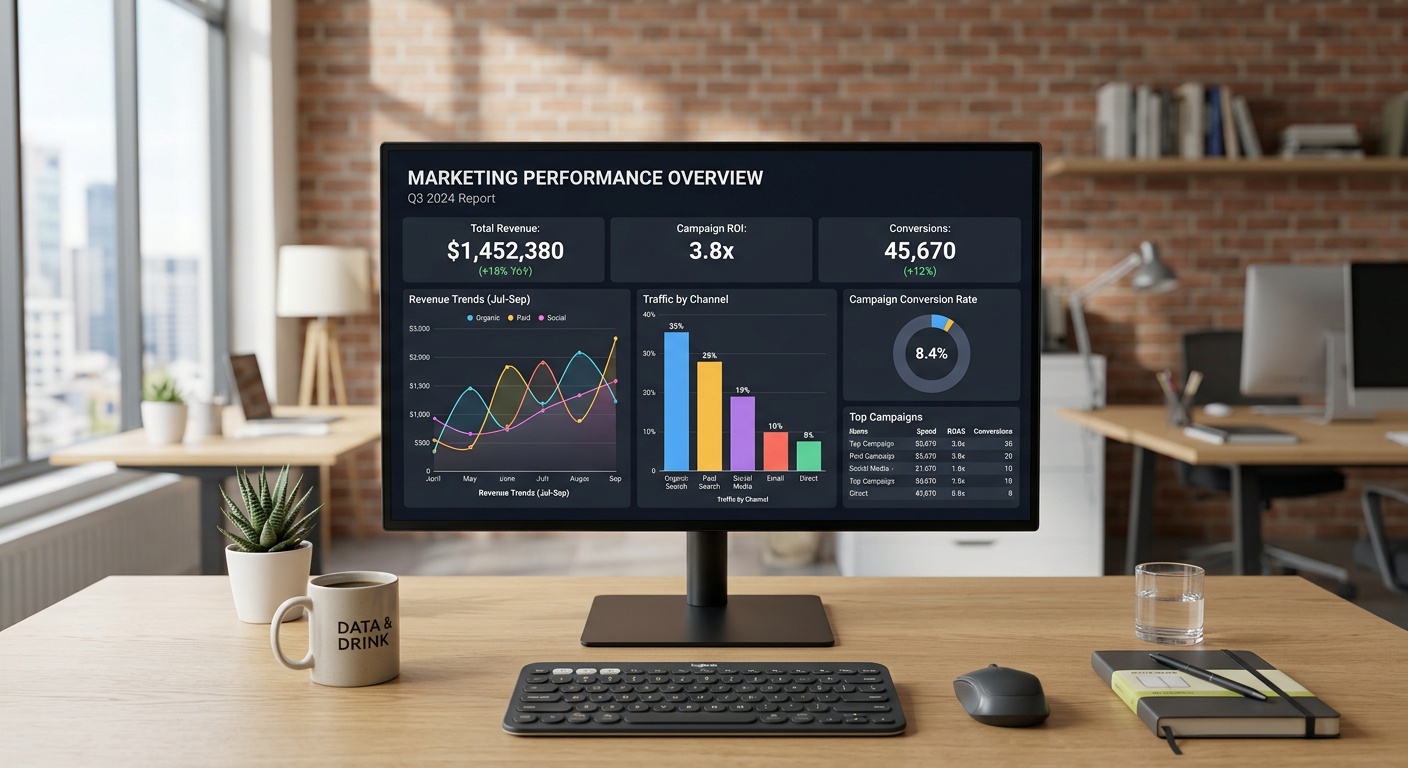
Choosing the Best Digital Marketing Agency for Your SME in 2026
Reading time: 9 minutes
Table of Contents
- Why This Decision Matters More Than Ever
- The Real Cost of Getting It Wrong
- What Actually Separates Great Agencies from Average Ones
- A Practical Evaluation Framework
- Agency Types Compared
- Common Challenges and How to Overcome Them
- Case Snapshots
- FAQs
- Your Roadmap Forward
Why This Decision Matters More Than Ever
Ever spent months vetting a digital marketing agency only to discover three quarters in that they’ve been running the same generic playbook on every client? You’re not alone. With AI-generated content flooding every channel and ad costs climbing, small and medium enterprises can’t afford to gamble on the wrong partner in 2026.
Here’s the straight talk: choosing an agency isn’t about finding the flashiest portfolio—it’s about finding a team whose incentives, processes, and expertise actually align with your growth stage. According to a 2026 Clutch survey, 67% of SMEs that switched agencies in the past year did so because of poor communication, not poor results. That’s a compliance-style problem hiding inside a marketing decision.
The Real Cost of Getting It Wrong
A mismatched agency doesn’t just waste your budget—it drains internal bandwidth, delays product launches, and can quietly erode brand trust through inconsistent messaging. Marketing leaders estimate that a botched agency relationship costs SMEs an average of 4-6 months of stalled growth before the mistake is even recognized and corrected.
Quick Scenario
Imagine you run a 15-person e-commerce brand selling sustainable homeware. You hire a large agency known for automotive clients. Six months later, your CAC has doubled and nobody on their team understands your niche audience. Sound familiar? This is exactly why specialization matters more than size.
What Actually Separates Great Agencies from Average Ones
Great agencies in 2026 share three traits that are easy to overlook during the pitch phase:
- Transparent attribution: They show you exactly which channels drive revenue, not just impressions.
- Category fluency: They’ve solved problems similar to yours before, not just adjacent ones.
- Adaptive processes: They adjust strategy based on live data rather than locking you into a rigid quarterly plan.
Ilya Petrov, a marketing consultant who advises SMEs across the Baltics, puts it bluntly: “The agencies winning in 2026 aren’t the ones with the biggest AI toolkits—they’re the ones who can explain, in plain language, why a strategy will move your specific revenue needle.”
Practical Roadmap for Evaluation
- Audit your own goals and budget realism before requesting proposals.
- Request case studies from businesses your size, not just recognizable brands.
- Ask how they report failure, not just success.
- Clarify contract flexibility and exit terms upfront.
A Practical Evaluation Framework
Rather than judging agencies purely on creative samples, run them through a structured filter. Below is a simplified comparison of common agency types SMEs typically consider in 2026.
| Agency Type | Avg. Monthly Cost (USD) | Best For | Typical Contract Length | Reporting Frequency |
|---|---|---|---|---|
| Full-Service Agency | $4,000–$10,000 | Multi-channel growth | 6–12 months | Monthly |
| Niche Specialist (e.g., SEO-only) | $1,500–$4,000 | Focused, measurable channel growth | 3–6 months | Bi-weekly |
| Freelance Collective | $800–$2,500 | Lean startups, limited budgets | Month-to-month | Weekly |
| AI-First Growth Agency | $2,000–$6,000 | Data-heavy, rapid testing | 3–9 months | Real-time dashboards |
Where SMEs Get the Best ROI
Based on aggregated 2026 client surveys, here’s how satisfaction scores compare across agency types when SMEs were asked to rate overall ROI on a 100-point scale.
Common Challenges and How to Overcome Them
Challenge 1: Vague Reporting
Many SMEs sign contracts without defining what “success” looks like numerically. Fix this by requiring a shared KPI dashboard before signing, not after month one.
Challenge 2: Misaligned Expectations on Timeline
SEO and content strategies often take 4-6 months to show measurable traction, yet many SMEs expect results in weeks. Set milestone check-ins at 30, 90, and 180 days to manage expectations realistically.
Challenge 3: Hidden Costs
Ad spend, tool licensing, and creative production fees are frequently excluded from headline pricing. Always request an itemized cost breakdown before signing.
Case Snapshots
Case 1: A 12-person furniture SME switched from a full-service agency to a niche SEO specialist in early 2026 and saw organic traffic grow 143% in five months, while cutting monthly spend by 30%.
Case 2: A regional bakery chain partnered with an AI-first agency for hyper-local ad targeting, reducing customer acquisition cost from $18 to $9 within one quarter.
Case 3: A boutique consultancy hired a freelance collective for social content, but lacked strategic oversight—leading to inconsistent branding until they added a part-time marketing manager to coordinate the freelancers.
FAQs
How much should an SME budget for digital marketing in 2026?
Most healthy SMEs allocate 7-12% of revenue to marketing, with digital channels typically receiving 60-80% of that budget depending on industry and growth stage.
Should I choose a local agency or a remote/global one?
Local agencies often understand regional consumer behavior better, while remote agencies may offer specialized expertise at lower rates. The right choice depends on whether your audience is hyper-local or broadly digital-first.
How long should I give an agency before evaluating results?
Give paid channels 60-90 days and organic/content strategies 4-6 months before making a judgment—shorter windows rarely reflect true performance.
Your Roadmap Forward
- Step 1: Define 3 measurable goals before contacting any agency.
- Step 2: Shortlist agencies with proven experience in your specific niche.
- Step 3: Request transparent, itemized pricing and reporting cadence.
- Step 4: Start with a 90-day trial contract before committing long-term.
- Step 5: Reassess quarterly using shared KPI dashboards, not gut feeling.
As AI reshapes content creation and ad targeting throughout 2026, the SMEs that thrive will be those who treat agency selection as a strategic partnership decision, not a one-time purchase. So, which of these five steps will you implement first this week to turn your next agency search into a genuine growth partnership?
About the Author
