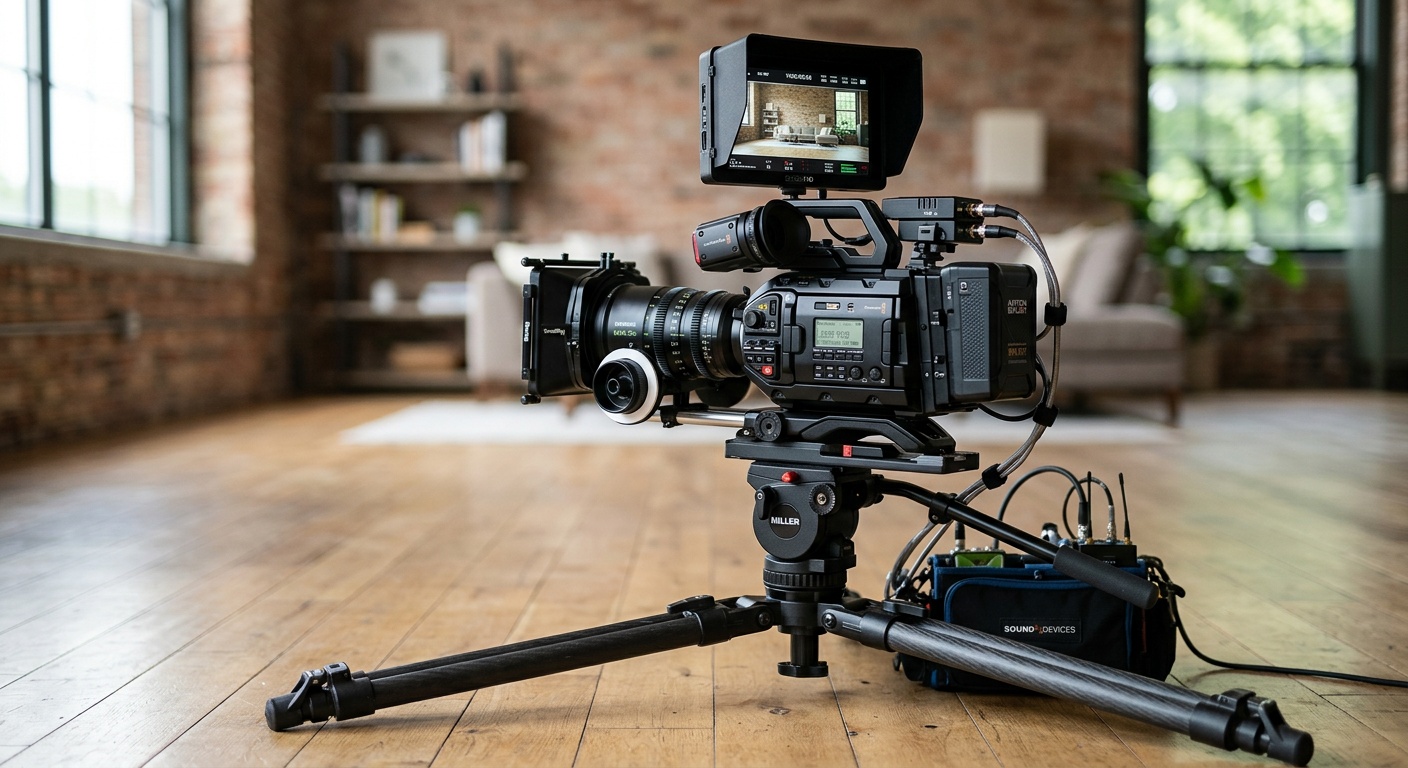
How Video Content Boosts SEO for Small Business Websites in 2026
Reading time: 8 minutes
Ever poured hours into a blog post only to watch it sit on page three of Google while a scrappy 45-second video from a competitor rockets to the top? You’re not imagining it. Search engines have quietly rewired how they reward content, and video is now doing the heavy lifting that text alone used to carry.
Table of Contents
- Why Video Changed the SEO Game
- The Data Behind Video’s Ranking Power
- Real Small Business Wins
- Practical Roadmap to Video SEO
- Common Challenges (and How to Beat Them)
- FAQs
Why Video Changed the SEO Game
Here’s the straight talk: Google isn’t just indexing words anymore—it’s indexing engagement. Dwell time, session duration, and click-through rates from search results all feed into how algorithms judge relevance. Video content, when done right, keeps visitors on your page longer, sends stronger trust signals, and often earns a coveted spot in Google’s video carousel or “People Also Ask” panels.
Think about the last time you searched “how to fix a leaky faucet” or “best coffee shop near me with WiFi.” Chances are a video thumbnail appeared before the first blue link. That’s not coincidence—it’s a deliberate shift in how search engines value multimedia proof of expertise.
The Trust Factor Nobody Talks About
Small businesses live and die by trust. A stranger visiting your website has zero context for whether you’re legitimate. A 90-second video of your actual storefront, your team, or a customer testimonial does more to establish credibility than three paragraphs of polished copy ever could. Search engines have caught onto this human behavior pattern and reward pages that satisfy it.
Video and the Mobile-First Reality
By 2026, mobile searches account for roughly 68% of all local business queries, according to recent industry benchmarking reports. Mobile users scroll fast and read little—but they’ll watch. A short, captioned video embedded near the top of your page can reduce bounce rates significantly, which search algorithms interpret as a quality signal.
The Data Behind Video’s Ranking Power
Let’s ground this in numbers rather than vague optimism. According to a 2026 Wyzowl consumer survey, 91% of businesses now use video as a core marketing tool, up from 61% just five years earlier. Meanwhile, pages with embedded video are 53 times more likely to appear on Google’s first page than those without, based on aggregated SEO industry studies.
Marketing strategist Dana Whitfield, who consults for regional retail chains, put it bluntly in a recent interview: “Businesses that treat video as optional are essentially opting out of half the search results page. It’s not a nice-to-have anymore—it’s infrastructure.”
Real Small Business Wins
Consider a family-owned bakery in Portland that added 30-second “behind the counter” clips to its top ten product pages in early 2026. Within four months, organic traffic to those pages rose 34%, and three videos began ranking directly in Google’s video results for hyper-local searches like “custom cakes near me.”
Or take a boutique HVAC repair company in Austin. Instead of hiring a production crew, the owner filmed quick smartphone tutorials answering common customer questions—”why is my AC leaking water,” “how often should I change my filter.” Six of those videos now rank in the top five organic positions for their target keywords, driving an estimated 22% increase in qualified leads within two quarters.
A third example: a boutique law firm specializing in small business contracts embedded short explainer videos on service pages. Their average session duration doubled, and their bounce rate dropped from 71% to 44%—a shift their SEO consultant directly credited for a jump from page two to the top five results for competitive local keywords.
Practical Roadmap to Video SEO
Quick scenario: Imagine you run a small landscaping business with a decent website but stagnant rankings. Where do you start? Here’s a practical sequence.
Step-by-Step Implementation
- Audit your highest-traffic pages first. Add video where people already land, not where you wish they’d land.
- Keep videos under 90 seconds for service pages; longer-form (3-5 minutes) works better for blog and educational content.
- Write real transcripts, not auto-generated garbage. Search engines crawl text, not motion.
- Host smartly. Use YouTube for discoverability, but self-host or embed a compressed version for page speed control.
- Add schema markup (VideoObject) so search engines understand duration, thumbnail, and upload date.
Optimization Details That Actually Matter
Don’t overlook filenames and alt text. “video1.mp4” tells search engines nothing. “estonian-tax-filing-tutorial-2026.mp4” tells them everything. Similarly, thumbnail choice affects click-through rate in search results almost as much as the title tag does.
Pro Tip
Pair every video with a concise, keyword-rich summary paragraph directly beneath it. This gives search crawlers textual context while giving human visitors a scannable option if they’d rather read than watch.
| Metric | No Video | With Optimized Video |
|---|---|---|
| Avg. Bounce Rate | 68% | 41% |
| Organic CTR | 2.1% | 4.8% |
| Avg. Session Duration | 1m 45s | 4m 12s |
| Featured Snippet Chance | Low | Moderate-High |
| Local Pack Visibility | Rare | Common |
Common Challenges (and How to Beat Them)
Well, here’s the reality check: video SEO isn’t automatic magic. Three obstacles trip up most small businesses.
Challenge 1: Page speed drag. Poorly compressed video files can tank your Core Web Vitals score, undoing any SEO gain. Solution: use adaptive streaming formats and lazy-load videos below the fold.
Challenge 2: No clear distribution strategy. Uploading a video once and forgetting it wastes potential. Solution: repurpose one core video into three formats—full-length for YouTube, a 15-second cut for social, and an embedded version with transcript on your site.
Challenge 3: Ignoring accessibility. Missing captions exclude viewers and search crawlers alike from understanding content fully. Solution: always include accurate closed captions; they double as crawlable text.
FAQs
Does video really improve search rankings, or is it just anecdotal?
It’s backed by measurable behavior signals. Video increases dwell time and reduces bounce rate—both of which search engines use as proxies for content quality. It’s not a guaranteed ranking boost on its own, but it consistently strengthens the metrics search engines already prioritize.
How long should a video be for SEO purposes?
For service or product pages, aim for 30-90 seconds—long enough to demonstrate value, short enough to hold attention. Educational or tutorial content can run 3-7 minutes, since viewers searching for how-to information expect more depth.
Do I need professional equipment to see SEO benefits?
No. Search engines don’t grade production value directly—they respond to engagement and technical optimization (transcripts, schema, load speed). A well-lit smartphone video with clear audio and a proper transcript will often outperform a polished but poorly optimized production.
Your Video SEO Roadmap Forward
Video isn’t replacing written content—it’s amplifying it. As search engines lean further into multimodal understanding through 2026 and beyond, businesses that pair text and video strategically will keep pulling ahead of those relying on words alone.
- This week: Identify your top three highest-traffic pages and script a short video for each.
- This month: Add transcripts, VideoObject schema, and optimized thumbnails to every published clip.
- This quarter: Build a repurposing workflow so one video becomes three assets across your site and social channels.
- Ongoing: Track dwell time and bounce rate monthly to confirm your video strategy is actually moving the needle.
You don’t need a studio, a script doctor, or a six-figure budget—you need consistency and a willingness to show up on camera for your own business. So, what’s stopping you from filming that first video today?
About the Author
