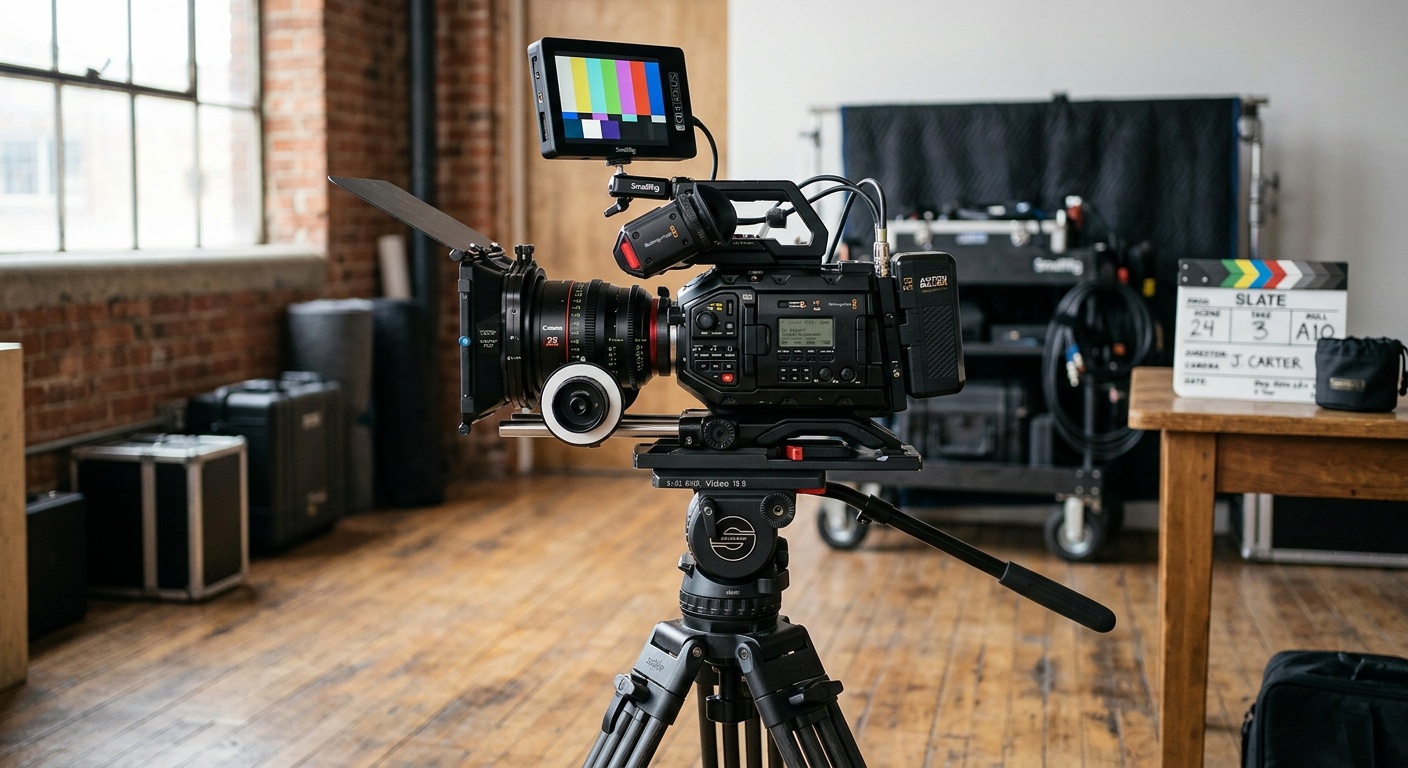
How Digital Video Marketing Helps Small Businesses Grow Faster in 2026
Reading time: 9 minutes
Here’s a question worth sitting with: when was the last time you bought something—or even researched something—without watching a single video first? If you’re struggling to remember, you’re proving the exact point this article is built around.
Table of Contents
- Why Video Marketing Matters More Than Ever
- The Core Growth Drivers
- Real Small Business Examples
- Common Challenges (and How to Beat Them)
- Video vs. Other Marketing Channels
- Your Roadmap Forward
- FAQs
Why Video Marketing Matters More Than Ever
Let’s get the straight talk out of the way first: video isn’t a “nice-to-have” marketing tactic anymore—it’s the default language of the internet. By 2026, video content accounts for over 82% of all consumer internet traffic, according to recent industry analyses, and platforms like TikTok, Instagram Reels, and YouTube Shorts have trained audiences to expect motion, sound, and story before they even consider text.
For small businesses, this shift is actually a gift. Video used to require expensive studios and production crews. Now, a smartphone, decent lighting, and a clear message can outperform a six-figure ad campaign if the storytelling lands. That’s a genuine democratization of marketing power—and it’s why so many scrappy local brands are outpacing bigger, slower-moving competitors.
The Psychology Behind Video’s Pull
Humans process visual information roughly 60,000 times faster than text. Combine that with sound, motion, and emotion, and you get a format that builds trust faster than any blog post or brochure ever could. Viewers don’t just read about your product—they watch someone use it, react to it, and vouch for it. That’s persuasion on a biological level.
Why Small Businesses Specifically Benefit
Large corporations often move slowly through layers of approval, legal review, and brand guidelines. Small businesses don’t have that baggage. A local bakery can film a Tuesday morning croissant batch and post it by lunchtime. That immediacy and authenticity—imperfect, human, real—is exactly what today’s audiences crave more than polished corporate ads.
The Core Growth Drivers
Video marketing doesn’t just “help” small businesses—it accelerates specific growth levers that were previously slow or expensive to pull.
- Faster trust-building: Seeing a real founder or employee speak builds credibility quicker than any written testimonial.
- Higher conversion rates: Product pages with video see conversion increases averaging 34% compared to static-image pages.
- Improved SEO visibility: Google increasingly surfaces video content directly in search results, especially for “how-to” and local intent searches.
- Lower customer acquisition cost: Organic video reach on platforms like TikTok and Instagram can generate leads without heavy ad spend.
- Stronger repeat engagement: Short-form series (behind-the-scenes, FAQs, tutorials) keep audiences coming back, unlike one-off static posts.
Pro Tip: The goal isn’t to make one “perfect” video—it’s to build a consistent video habit that compounds trust over weeks and months.
Real Small Business Examples
Case Study: A Regional Coffee Roaster
In early 2025, a small coffee roasting business in Oregon began posting 45-second videos showing their roasting process, sourcing trips, and brewing tips. Within eight months, their Instagram following grew from 3,200 to just under 41,000. More importantly, online orders increased by 68%, with the owner attributing most new customers directly to video discovery rather than paid ads.
Case Study: A Boutique Law Firm
A three-person family law practice started publishing short “legal myth-busting” videos answering common client questions. Instead of feeling stiff and corporate, the videos felt approachable. Within six months, consultation bookings rose by 40%, and the firm reported that nearly half of new clients mentioned watching a video before calling.
Case Study: An Independent Skincare Brand
A two-person skincare startup leaned heavily into user-generated content and unboxing videos from micro-influencers. Rather than chasing celebrity endorsements, they focused on dozens of small creators with 5,000–20,000 followers each. The result? A 3.2x return on ad spend when video content was paired with retargeting campaigns—significantly higher than their previous static-image campaigns.
Common Challenges (and How to Beat Them)
Challenge 1: “We Don’t Have Time to Film Constantly”
Quick Scenario: Imagine you’re a solo business owner juggling operations, customer service, and marketing. Filming feels like one more job. The fix? Batch production. Dedicate two hours once every two weeks to film 8–10 short clips. Repurpose one core video into five smaller cuts for different platforms.
Challenge 2: “Our Videos Don’t Look Professional Enough”
Here’s the reassuring truth: audiences in 2026 associate over-polished videos with big, impersonal brands. Slightly imperfect, authentic footage often performs better because it feels trustworthy. Focus on clear audio and good lighting—those two factors matter far more than expensive cameras.
Challenge 3: “We Can’t Measure ROI Clearly”
Track platform-specific metrics like watch-through rate, saves, and shares rather than just views. Pair video campaigns with unique discount codes or landing pages to directly attribute sales. Without this tracking, you’re flying blind—and guessing rarely scales.
Video vs. Other Marketing Channels
| Marketing Channel | Avg. Engagement Rate | Avg. Conversion Lift | Cost to Produce | Time to See Results |
|---|---|---|---|---|
| Short-Form Video | 5.8% | +34% | Low | 1–4 weeks |
| Static Social Posts | 1.9% | +9% | Very Low | 2–6 weeks |
| Email Marketing | 2.6% | +14% | Low | 2–8 weeks |
| Paid Search Ads | 3.1% | +21% | Medium-High | Days–weeks |
| Blog/SEO Content | 2.2% | +11% | Low-Medium | 3–6 months |
Visualizing Engagement: A Quick Snapshot
As one digital strategist put it during a 2026 marketing summit: “Video isn’t competing with other channels anymore—it’s the connective tissue that makes every other channel work better.” That sentiment captures why so many small businesses now treat video as their content foundation rather than an occasional extra.
Your Roadmap Forward
Ready to turn video from an intimidating idea into a growth engine? Here’s a practical, no-fluff action plan:
- Start with one recurring format. Pick something sustainable—a weekly tip, a behind-the-scenes clip, or a customer spotlight—and commit to it for eight weeks before judging results.
- Batch-film to save time. Record multiple videos in one sitting so content creation doesn’t compete with daily operations.
- Prioritize clarity over polish. Clear audio, decent lighting, and a strong hook in the first three seconds matter more than expensive equipment.
- Repurpose aggressively. Turn one long video into shorts, quotes, captions, and email content to maximize every filming session.
- Track the right metrics. Watch-through rate and saves often predict long-term growth better than raw view counts.
Video marketing is no longer optional scenery in the background of business growth—it’s becoming the main stage. As AI-assisted editing tools continue lowering production barriers throughout 2026 and beyond, the businesses that build genuine, consistent video habits now will be the ones customers trust first when it’s time to buy.
So, here’s the real question for you: what’s the one video your business could film this week that would make a stranger trust you a little more?
FAQs
Do I need expensive equipment to start video marketing?
No. A modern smartphone, a inexpensive microphone, and natural lighting are enough to produce videos that perform well. Audiences in 2026 respond more to authenticity than production value.
How often should a small business post video content?
Consistency matters more than frequency. Posting two to three short videos per week sustainably outperforms sporadic bursts of high-effort content followed by long silences.
Which platform should small businesses focus on first?
Start where your existing customers already spend time. Local service businesses often see strong results on Instagram and YouTube Shorts, while younger consumer brands typically find faster traction on TikTok.
About the Author
